RUNNELS, Travis Trevino
Travis Trevino Runnels
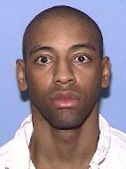
| Name | Runnels, Travis Trevino |
| TDCJ Number | 999505 |
| Date of Birth | 12/17/1972 |
| Date Received | 11/18/2005 |
| Education Level (Highest Grade Completed) | 11 |
| Date of Offense | 01/29/2003 |
| Date of arrest: | Same day |
| Age (at the time of Offense) | 30 |
| Age (when received) | 32 |
| County | Potter |
| Race | Black |
| Gender | Male |
| Hair Color | Black |
| Height (in Feet and Inches) | 6′ 0″ |
| Weight (in Pounds) | 208 |
| Eye Color | Brown |
| Native County | Dallas |
| Native State | Texas |
| Victim profile: | Stanley A. Wiley, 38 (prison employee) |
| Method of murder | Cutting his throat |
Prior Offenses
TDCJ# 081244 on a five year sentence for burglary of a building from Dallas County; TDCJ# 782388 on a seventy year sentence for aggravated robbery from Dallas County.
Summary
On 01/29/2003 in Potter County, while incarcerated in the TDCJ Clements Unit, Runnels fatally stabbed a forty year old white male, who was working as an Industrial Supervisor in the unit boot factory.
Runnels was unhappy with his position as janitor at the prison boot factory and was angry that his request for a transfer to work in the prison barbershop had not been granted.
On the morning of the murder, he told another inmate that he was going to be "shipped one way or another" and that "he was going to kill someone." (Runnels vs. State). Upon arriving at the boot factory, he approached the victim and cut his throat. He then walked away from the victim until he was later identified and removed from general population.
Travis Trevino Runnels, 46, was executed by lethal injection on 11 December 2019 in Huntsville, Texas for the murder of a prison employee.
In 1993, Runnels was convicted of burglary of a building, sentenced to five years in prison, and placed on probation. Later that year, he was convicted of another burglary carrying another five-year sentence, and his probation was revoked. In 1995,[1] he was convicted of aggravated robbery with a deadly weapon - a firearm - and his sentence was extended by another 70 years.
On Wednesday, 29 January 2003, Runnels was incarcerated at the Clements Unit of the Texas Department of Criminal Justice in Potter County, serving in the eighth year of his 70-year sentence. He was assigned as a janitor at the prison boot factory and, according to trial testimony, was angry that his request to transfer to being a barber had not been granted. He told fellow inmate Bud Williams that morning that he was going to be "shipped one way or another" and that "he was going to kill someone." He said he would kill the supervisor, Stanley Wiley, if he said anything to him that morning. He told another inmate, William Gilchrist, that he planned to hold the factory manager hostage in the office after the other correctional officers left. After Runnels arrived at the boot factory, he told inmate Phillip Yow that he was going to do something.
During the first shift, Runnels, then 30, approached Wiley, raised a knife, tilted his head back, and cut his throat. He then wiped the knife with a white rag and walked back toward the trimming tables.
When Yow asked Runnels why he attacked Wiley, he stated that it could have been anyone "as long as they was white." When Yow stated that Runnels could get the death penalty if Wiley died, Runnels answered, "A dead man can't talk."
The medical examiner found a cut 23 centimeters (9 inches) long on Wiley's neck, extending in depth to the spine, severing the external carotid artery and the internal jugular vein.
Runnels pleaded guilty at his trial. During the sentencing hearing, the state presented evidence that while Runnels was in prison in 1999, he hit a guard in the jaw. Between Wiley's killing and Runnels's trial, Runnels threw urine at a guard, threw a light bulb at a guard, and threw feces at a guard.
Under cross-examination, seven prison inmates who had contact with Runnels on the day of the murder testified that they had never previously known Runnels to be violent and that he cooperated with officers following the attack on Wiley. The inmates vouching for Runnels included Bud Williams, who stated that he had known him for eight years.
Runnels's attorneys did not bring any witnesses to testify on his behalf. According to court records, they contacted his mother, father, grandfather, and brother. The brother refused to make the trip to Amarillo. The grandfather made himself ineligible to testify by remaining in the courtroom during the trial. The mother and grandmother left and began driving home before they were called to testify. When attorney Kathy Garrison phoned them, they told her there was nothing they could do for Runnels and hung up the telephone.
The jury accepted Runnels's guilty plea in October 2005 and sentenced him to death. The Texas Court of Criminal Appeals affirmed the conviction and sentence in September 2007.
In his appeals, Runnels alleged that his guilty plea was involuntary because his attorneys misled him into thinking that they would present a more substantial defense during his sentencing hearing and possibly help him avoid the death penalty. In 2001, the Court of Criminal Appeals sent his case back to the trial court so that Laura Hamilton, one of Runnels's attorneys, could testify on this issue. After a live hearing in which Hamilton testified, the trial court found that Runnels received constitutionally adequate assistance from counsel. The Court of Criminal Appeals affirmed this finding in March 2012. All of Runnels's subsequent appeals in state and federal court were denied.
After the U.S. Supreme Court rejected Runnnels's appeal in 2019, Runnels wrote a letter to the Houston Chronicle discussing some of the issues with his case. "Never at any point have I not accepted responsibility for my actions," he wrote, "but I can't silently take an unfair shake of justice."
In a last-ditch appeal to the Supreme Court, attorneys contended that Runnels's death sentence was invalid because of false testimony given by A. P. Merillat, who testified as an expert witness for the state at Runnels's punishment hearing. Merillat testified about the levels of inmate classification in Texas prisons and what they mean as far as how prisoners are housed and supervised. The essence of Merillat's testimony was that because of TDCJ's inmate classification rules, Runnels would be a threat to prison workers and other prisoners unless he was sentenced to death. Runnels's lawyers claimed Merillat's testimony was "plainly and patently false" and, therefore, their client's death sentence was unconstitutional. They stated that some aspects of what Merillat testified to had been changed by TDCJ months before Runnels's trial, while other aspects were simply incorrect.
Merillat acknowledged, in an interview with the Texas Tribune, that he might have been wrong, but said he did not deliberately misstate anything. "When I testified, I testified with the knowledge that I had at the time," he said.
Two other Texas death sentences involving similar false testimony by Merillat have been overturned - most recently in 2012 - but in both of those cases, the prisoners, unlike Runnels, had little to no criminal histories. The courts have also upheld death sentences in cases where Merillat testified. The crucial issue is not necessarily whether false testimony was made, but whether the jury relied upon it. The state argued, in its brief to the Supreme Court, that the jury would have found Runnels to be a danger in prison no matter how strict TDCJ's classification rules were.
Merillat, who now works for the Montgomery County District Attorney's Office, agreed that Runnels should not have received the death sentence if jurors relied on something he said that was incorrect. "If the jury gave him the death penalty because of his particular crime and the heinousness of it and the actions he committed after his crime ... then the jury's verdict should stand," Merillat said. "If they gave him the death penalty because of what I said and I was wrong, I don't want him to have the death penalty."
Janet Gilger-VanderZanden, one of Runnels's attorneys, said Runnels had "true and authentic remorse for the death of Mr. Wiley."
Runnels's execution was delayed for about 30 minutes while prison officials awaited the Supreme Court's response. The court issued a short ruling denying Runnels's appeal at about 6:30 p.m.
Three of Runnels's female friends and two of his attorneys watched his execution from a viewing room adjacent to the death chamber. Stanley Wiley's sister, Margaret Robertson, and her husband observed from another viewing room. Several hundred Texas corrections officers stood in formation outside the prison.
Runnels answered "No" when the warden asked if he wanted to make a final statement. He neither accepted responsibility nor expressed remorse in his last moments, but he did smile at his friends and mouth words and a kiss toward them after the lethal injection was started. He did not look over at the room where Robertson and her husband stood. He blurted out "Woof, woof!" before taking his final breaths. He was pronounced dead at 7:26 p.m.

1995 according to TDCJ records, but 1997 according to court records. ↩︎